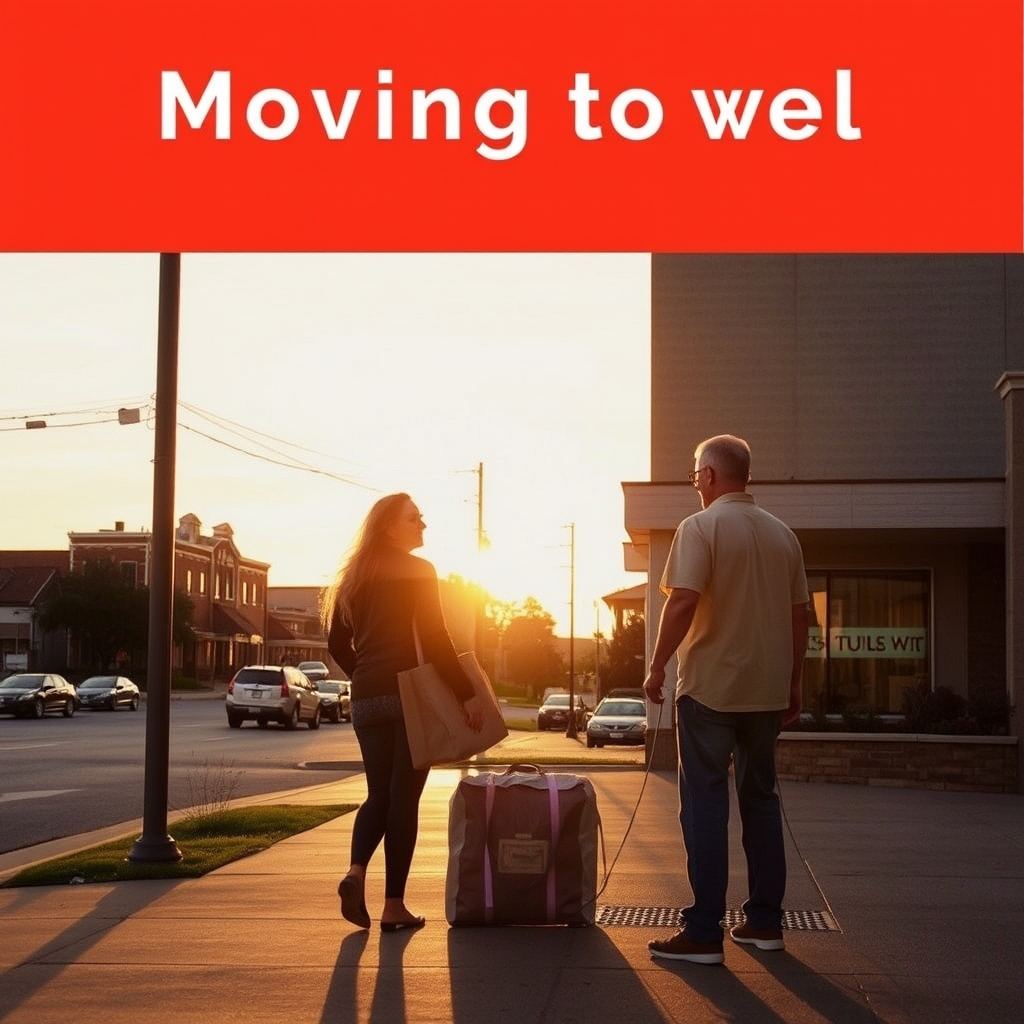
Two Midwest cities compared on housing, jobs, food and pace for anyone considering the move south.
There is a particular kind of comfort that comes from trading one Midwestern city for another, and if you are arriving in Tulsa from Kansas City you will feel it almost immediately: the wide streets, the unpretentious friendliness, the sense that life here moves at a pace designed for actual living rather than mere surviving. You already speak this language, in a way. But Tulsa has its own distinct character, its own culinary obsessions, its own neighborhoods with genuine personalities, and its own surprising economic advantages that tend to catch newcomers off guard in the very best way. Consider this your personal orientation, written with the hope that by the time you finish reading, Tulsa will already feel a little bit like home.
The Cost of Living Conversation You Will Want to Have Immediately
Kansas City is by no means an expensive city, so it may genuinely surprise you to learn that Tulsa sits roughly 14 percent below the national average on cost of living. Compared to Kansas City, you will likely notice the difference most in housing, where your dollars stretch with a generosity that can feel almost surreal at first. In Midtown Tulsa, one of the city's most coveted and architecturally rich areas, homes with genuine character sell in the upper $200s to around $300,000, a range that would buy you considerably less in comparable Kansas City neighborhoods like Brookside or Waldo. Farther south in Jenks or Bixby, newer construction with excellent schools tends to land in a similar range, with some larger properties climbing higher depending on the lot and finish level.
To get a clear and current picture of assessed values before you make any offers, the Tulsa County Assessor maintains a searchable online database that allows you to look up individual properties, review recent sales, and understand how the local tax structure works. Oklahoma's property tax rates are among the more favorable in the region, which contributes meaningfully to the monthly cost advantage you will enjoy over time.
In Tulsa, the city asks less of your paycheck and gives you more room, more time, and more genuine connection in return.
If you happen to work remotely, there is one more financial detail worth knowing: the Tulsa Remote program offers a $10,000 grant to qualifying remote workers who commit to living in Tulsa for at least a year. It is one of the more generous relocation incentive programs in the country, and it has attracted thousands of professionals from larger, more expensive cities over the past several years. Worth exploring before you even finish unpacking.
From the Crossroads to the Oil Capital: Understanding the Job Market
Kansas City has long been defined by its position as a transportation and distribution hub, with growing tech and finance sectors layered over that traditional base. Tulsa's economy carries its own distinctive heritage, rooted in energy and aerospace, with an expanding medical corridor and a quietly serious technology sector that the Tulsa Regional Chamber has worked steadily to grow. Companies like NORDAM, American Airlines Maintenance and Engineering, and a significant cluster of energy firms have anchored the workforce for decades, while newer arrivals in the healthcare, financial services, and creative industries are broadening the picture considerably.
If your career is already established and you are simply relocating for lifestyle or family reasons, you will find that Tulsa's professional community tends to be accessible in a way that larger metros are not. People return calls. Introductions happen over coffee rather than through layers of gatekeeping. The city's relatively compact professional world means that a thoughtful introduction can open doors that might take years to find elsewhere.
The Neighborhoods: Familiar Rhythms, New Addresses
As someone from Kansas City, you likely have an intuitive appreciation for neighborhoods with genuine history and personality, and Tulsa will not disappoint you in that regard. Midtown is the area most often compared to Kansas City's Brookside or Waldo districts: tree-lined streets, bungalows and Tudors from the 1920s and 1930s, independent restaurants, and a walkability that feels earned rather than manufactured. Brookside in Tulsa, despite sharing a name with Kansas City's beloved neighborhood, is its own thing entirely: a stretch of Peoria Avenue lined with local dining, boutiques, and a social energy that rewards an afternoon of wandering.
If your work will bring you downtown regularly, you may find it worth reading our guide on where to live in Tulsa if you work downtown, which walks through the options closest to the core with a particular eye toward commute time and neighborhood character. For those drawn to newer construction and top-rated suburban schools, Jenks and Bixby to the south offer that combination with a polish that surprises people expecting the ordinary. Owasso to the north is similarly well-regarded, particularly among families, and Broken Arrow to the east is one of Oklahoma's largest cities in its own right, with a full range of amenities and a strong sense of community identity.
Food, Culture, and the Life Between Errands
Kansas City's food culture is legendary, and you will arrive in Tulsa with high standards. The good news is that Tulsa has been quietly building a dining scene that rewards curiosity. The city's barbecue tradition runs deep and earnest, the Mexican food in the north and east parts of the city is genuinely outstanding, and a new generation of chefs has brought thoughtful, independent restaurants to Brookside, the Brady Arts District, and Cherry Street that can hold their own against what you left behind.
Beyond food, Tulsa's cultural life has a centerpiece that simply has to be experienced to be believed. The Gathering Place, a world-class riverside park spanning 66 acres on the Arkansas River, is among the finest urban parks in the country and it is entirely free to the public. On a weekend afternoon, it will become one of your favorite places on earth, full stop. The arts community, anchored by the Philbrook Museum of Art, the Gilcrease Museum, and a deeply committed network of independent galleries and venues, offers a richness that Kansas City expats frequently cite as one of their most pleasant surprises.
Settling In: Your First Days and Weeks
The practical work of arriving in a new city can feel overwhelming, but Tulsa tends to make it manageable. Our first 30 days in Tulsa checklist is a good companion for the early weeks, covering everything from updating your address to finding your library card through the wonderful Tulsa City-County Library system, which offers resources far beyond books and genuinely serves as a community gathering point across its many branches.
For families with children, the school question tends to be an early priority. Tulsa offers a range of strong options depending on where you choose to live, and the Oklahoma School Report Card provides transparent performance data across all districts, allowing you to compare Jenks, Bixby, Owasso, Union, and Tulsa Public Schools side by side as you weigh your neighborhood decision.
The move from Kansas City to Tulsa is not a dramatic leap into the unknown. It is more like stepping from one warm room into another, slightly sunnier one, where the rent is a little lower, the pace is a little gentler, and the people, you will find, are genuinely glad you came. Welcome.
Keep exploring the full collection of Tulsa guides.