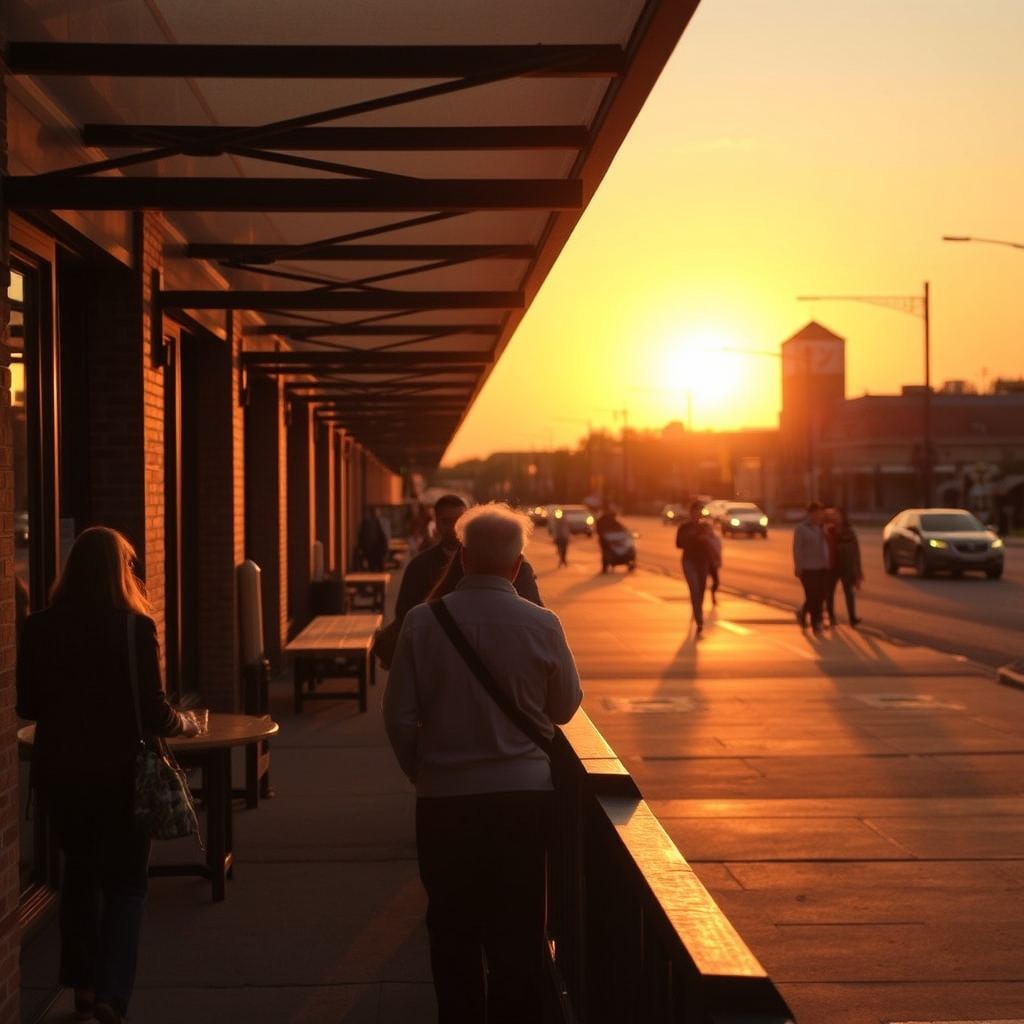
Driver's license, utilities, voter registration, doctors, schools: what to do in what order after you arrive.
The boxes are unpacked, the keys are in your hand, and Tulsa is officially yours , and now, somewhere between the excitement of your new beginning and the very long mental list forming in the back of your mind, you may be wondering where on earth to begin. Consider this your gentle, ordered guide through the practical business of becoming a Tulsan, arranged not to overwhelm you but to carry you forward, one satisfying step at a time, so that within thirty days you will feel not merely moved, but genuinely settled.
The First Week: Paperwork That Cannot Wait
Oklahoma law gives you thirty days to transfer an out-of-state driver's license after establishing residency, so this belongs at the very top of your list. Your nearest Oklahoma Department of Public Safety tag agency will need your current license, proof of Oklahoma residency (a utility bill or lease agreement works beautifully), your Social Security card, and proof of lawful status if applicable. The process is far less painful than it sounds, and many tag agencies in Tulsa are privately operated, meaning the lines move with surprising speed. While you are gathering documents, note that Oklahoma's tax structure is genuinely friendly to newcomers; a quick read through the Oklahoma Tax Commission's overview will reassure you that the state's income tax rates and property tax climate are among the more welcoming in the region.
Voter registration follows naturally from the same stack of documents. Oklahoma allows you to register online, by mail, or in person, and deadlines fall roughly three weeks before any election. Do not let this one slip to week four.
Tulsa has a way of making even the administrative feel like the beginning of something good.
Vehicle registration and license plates should be handled at the same tag agency visit if you can manage it, and if you are curious about property records or want to understand how local assessment works as you settle into your new home, the Tulsa County Assessor's office is a genuinely useful resource, particularly if you purchased rather than rented.
Week One, Continued: Getting the Lights On and the Internet Humming
Utilities in Tulsa are refreshingly straightforward. PSO (Public Service Oklahoma) handles electricity for most of the city, ONG (Oklahoma Natural Gas) covers gas service, and the City of Tulsa manages water accounts for most addresses within city limits. If you have landed in one of the sought-after suburbs , Jenks, Bixby, or Owasso among them , your utility providers may differ slightly, so confirm with your landlord or title company. Internet service options are plentiful, with fiber providers increasingly available across Midtown and beyond.
If you have not yet firmly decided where in the metro you are putting down roots, our guide on where to live in Tulsa if you work downtown walks you through the neighborhoods with real warmth and specificity, from the walkable energy of the Brady Arts District to the tree-lined ease of Midtown and Brookside.
Week Two: Schools, Healthcare, and the Business of Daily Life
If you are arriving with children, enrolling them in school is one of the most emotionally important tasks on your list, and Tulsa gives you genuinely good options across the metro. Tulsa Public Schools serves the city proper and includes several magnet programs worth exploring. Families who have chosen Jenks will find a district with a warm reputation at Jenks Public Schools, while those in Bixby will want to visit Bixby Public Schools, and Owasso families can begin the enrollment process at Owasso Public Schools. The Oklahoma School Report Card offers a clear, state-maintained overview of performance data across all districts, which can be a helpful companion as you make your decision with confidence rather than anxiety.
Healthcare follows closely. Tulsa is home to a full complement of hospital systems, including Saint Francis, Ascension St. John, and Hillcrest, all of which maintain physician referral lines that can help you establish primary care quickly. The Tulsa Health Department is also an excellent first stop for immunization records, public health resources, and guidance on county health programs for your family.
Week Three: Claiming Your Financial Advantage
Here is something that tends to delight newcomers, particularly those arriving from coastal cities: Tulsa's cost of living runs approximately fourteen percent below the national average. Housing is where this becomes most tangible. In established neighborhoods like Midtown and Brookside, well-kept bungalows and craftsman homes trade in the upper two-hundreds to around three hundred thousand dollars, while newer construction in Bixby, Jenks, and Owasso offers considerable square footage for similar figures. If you came to Tulsa as a remote worker, this is also the moment to confirm your eligibility for the Tulsa Remote grant, a program offering ten thousand dollars to qualifying remote workers who commit to living in the city for at least a year. The full details, application, and community programming are all found at Tulsa Remote's website, and the community of fellow participants has become a genuinely warm social network for many newcomers. If you are coming from a higher-cost metro, our guide on moving to Tulsa from New York puts the financial contrast into vivid, reassuring perspective.
Week Four: Getting Acquainted with Your City
By now the administrative chapter of your arrival is largely complete, and week four belongs to you and to Tulsa in a far more pleasurable sense. Make your first visit to the Gathering Place, the hundred-acre park along the Arkansas River that has become the social and spiritual gathering point of the city, and let its trails, kayak launch, and open lawns give you a felt sense of why people here love where they live. Get a library card at the Tulsa City-County Library, one of the most generous and well-loved library systems in the region, where your card opens not just books but museum passes, maker spaces, and digital resources. And spend a slow afternoon in Brookside or along Cherry Street, letting the neighborhood restaurants and local shops introduce themselves at their own pace.
For everything related to understanding your daily commute, the rhythms of Tulsa traffic, and the finer points of getting around the metro, our newcomer's guide to Tulsa driving and commutes will orient you with the same warmth and specificity you deserve at every step of this arrival.
A Final, Reassuring Word
Thirty days passes more quickly than you expect, and when it does, you will find that the list is behind you and something far lovelier is ahead: the slow, deepening pleasure of becoming a local. Tulsa rewards the people who choose it, and you have already made the most important move of all.
Keep exploring the full collection of Tulsa guides.