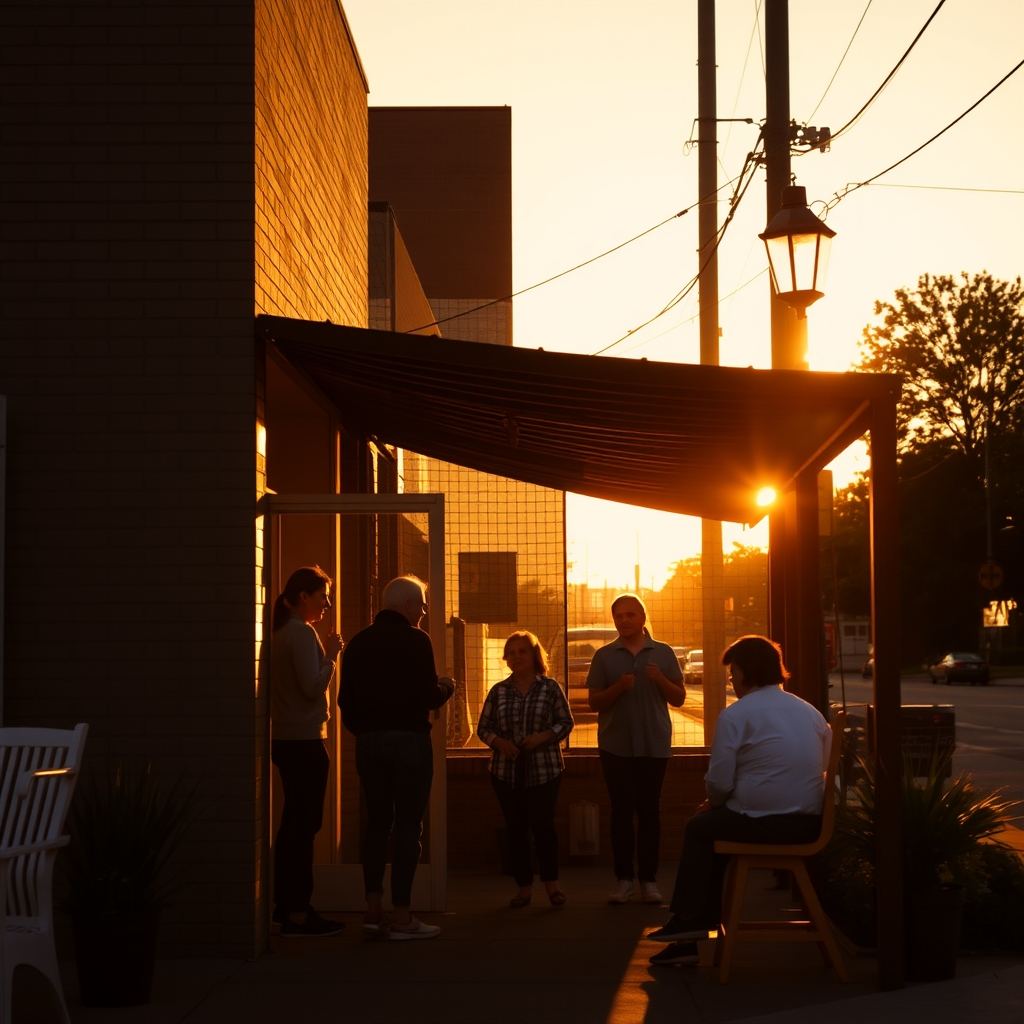
A realistic monthly budget for a household living in Tulsa on one income, from housing to childcare.
There is a particular kind of relief that settles over people when they sit down with a Tulsa budget for the first time, a quiet exhale, the loosening of a long-held tension in the shoulders, because the numbers simply make sense in a way they may not have in years. Whether you are arriving from a coastal city where a modest apartment claimed half your take-home pay, or from a Midwestern metro that offered affordability in theory but not quite in practice, Tulsa has a way of surprising you with how much breathing room a single income can genuinely provide. This guide is here to walk you through what a realistic month actually looks like, line by line, with honesty and enough specificity that you can begin to picture your life here with real confidence.
The Foundation: Why One Income Goes Further Here
Tulsa's cost of living runs roughly 14 percent below the national average, and that gap is not concentrated in one or two categories. It spreads across housing, groceries, utilities, and everyday services in a way that compounds meaningfully over the course of a year. The Oklahoma Department of Commerce regularly points to this affordability as one of the state's defining economic strengths, and it is not an abstraction. It shows up in your actual checking account, month after month.
If you are a remote worker relocating from another state, you may already be familiar with the Tulsa Remote program, which offers a $10,000 grant to qualifying remote workers who commit to living and working in Tulsa for at least a year. That grant, which arrives in installments, can meaningfully offset moving costs, cover a security deposit, or simply give a single-income household an early cushion while you find your footing. It is one of the more generous relocation incentives offered by any city in the country, and it speaks to how seriously Tulsa takes the business of welcoming new residents.
In Tulsa, a single income is not a compromise. It is, for many families, the beginning of something that actually feels sustainable.
Housing: Your Largest Line Item, and Your Biggest Relief
For most households, the conversation about one-income living begins and ends with housing, and this is precisely where Tulsa earns its reputation. A comfortable three-bedroom home in a desirable neighborhood generally falls somewhere in the upper $200s to around $300,000, depending on the area and the features you prioritize. Midtown Tulsa, with its older craftsman bungalows and proximity to restaurants, parks, and the arts district, tends to command prices in that same range while offering a walkable, characterful quality of life that newcomers find immediately charming.
South Tulsa suburbs like Jenks and Bixby attract families in part because of their school districts and their slightly newer housing stock, with prices that can stretch modestly higher for larger homes but remain well within reach for a household on one solid income. Owasso, to the north, draws buyers who want space, newer construction, and a quieter pace. If you are curious about how assessed values compare across the county, the Tulsa County Assessor maintains searchable records that can give you a grounded sense of what properties are actually valued at before you begin making offers.
For renters, a two-bedroom apartment in a well-maintained complex in Brookside or South Tulsa typically runs somewhere in the range of $1,100 to $1,500 per month, a figure that may feel almost disorienting if you are arriving from a market where that amount might rent a studio. Those who have made the move from particularly expensive cities, like the friends we walk through things with in our guide on moving to Tulsa from Portland, often describe a kind of recalibration that takes a few months to fully absorb.
The Middle of the Budget: Food, Transportation, and Utilities
A household of three or four eating a mix of home cooking and occasional restaurant meals can expect to spend somewhere in the range of $700 to $900 per month on groceries, depending on dietary preferences and how often you shop at specialty or natural food stores. Tulsa has a strong selection of both, from large regional chains to the farmers markets and local grocers that have grown considerably in recent years.
Transportation in Tulsa is almost entirely car-dependent, which is worth naming honestly. Most single-income households budget for one or two vehicles, with insurance and fuel together typically falling in the $300 to $450 range per month for a reasonably efficient car. Oklahoma's tax structure, which you can explore through the Oklahoma Tax Commission, is relatively favorable compared to many states, with no state income tax on Social Security and generally moderate rates that benefit single-income households at a variety of earning levels.
Utilities in Tulsa deserve a candid word. Summers are genuinely hot, and air conditioning costs reflect that. Plan for electric bills that can climb into the $180 to $250 range during July and August, with winter months being considerably more manageable. Our guide on what newcomers get wrong about Tulsa weather offers a fuller picture of the seasonal rhythms, which are worth understanding before your first August arrives.
Children, Schools, and Childcare
For families with children, childcare is frequently the second-largest line item after housing. Full-time daycare for an infant in Tulsa generally falls somewhere between $900 and $1,300 per month, while preschool-age programs can be modestly less. These figures are not small, but they are typically lower than comparable care in larger metros, and Tulsa's public school options are genuinely varied and worth researching carefully.
Families in the Jenks area often choose that community specifically for its schools, and Jenks Public Schools has built a strong reputation over many years. Bixby, Union, Broken Arrow, and Owasso all maintain their own well-regarded districts, and the Oklahoma School Report Card provides a useful starting point for comparing performance data across districts before you commit to a particular neighborhood.
What Remains: The Part That Changes Everything
When you add housing, utilities, transportation, groceries, childcare, and a reasonable allowance for healthcare costs and modest savings, a single-income household earning somewhere in the $65,000 to $80,000 range can find itself in genuinely comfortable territory in Tulsa. That is not a promise of ease without effort, but it is a meaningful departure from cities where that same income would leave little margin for anything beyond the essentials.
What that margin makes possible is the part worth pausing on. A membership at the Gathering Place, the extraordinary 100-acre park along the Arkansas River that has become the city's most beloved gathering space, costs nothing at all. The Tulsa City-County Library system is free, well-stocked, and genuinely excellent. Dinners out in Brookside or the Arts District are affordable enough to be a regular pleasure rather than a special occasion. These are the textures of daily life that a single income, properly stretched, can actually reach in Tulsa, and they are worth every mile of the journey to get here.
Keep exploring the full collection of Tulsa guides.