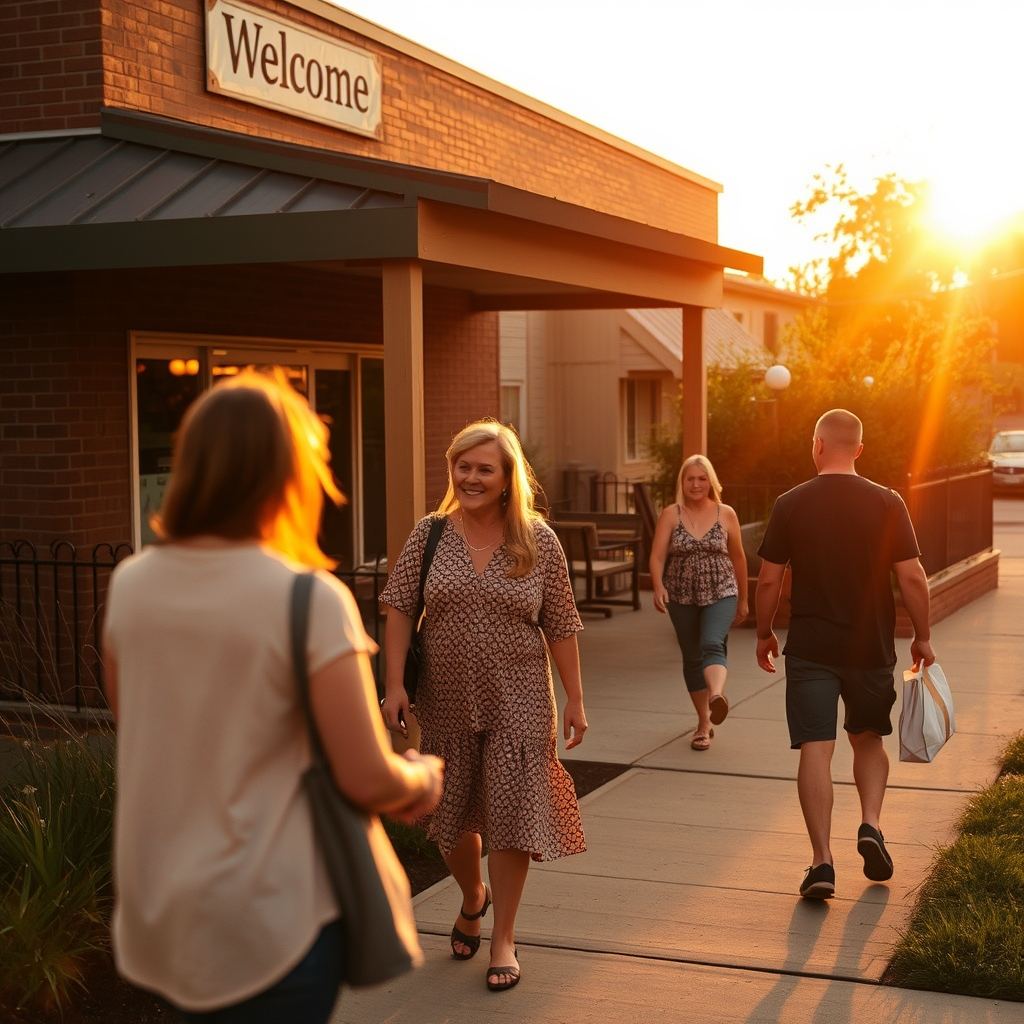
Cost of living, politics, outdoors and culture: what Portland transplants should expect from Tulsa.
There is a particular kind of exhale that happens when you realize a city is going to be genuinely good to you, and if you are arriving in Tulsa from Portland, that exhale may come sooner than you expect. You have traded the gray drizzle of the Willamette Valley for wide Oklahoma skies, a cost of living that will likely feel like a quiet miracle after years of Pacific Northwest pricing, and a city that has been quietly and steadily investing in itself in ways that reward the curious, the creative, and the community-minded. Tulsa is not Portland, and it does not pretend to be, but it has a warmth and a depth of character that, once you settle in, tends to earn a loyalty just as fierce.
The Financial Relief Is Real
Let us begin where the difference is most immediately felt: your budget. Tulsa's cost of living runs roughly 14 percent below the national average, which means that a salary that felt perpetually stretched in Portland will begin to breathe here. Housing, in particular, offers a generosity that Portland transplants often describe with genuine disbelief. In the neighborhoods you are most likely to love, a well-kept craftsman or a mid-century home with a real yard tends to fall somewhere in the upper $200s to around $300K, depending on size, condition, and location. The same money that rented you a modest apartment in Northwest Portland may purchase you a home with a front porch in Midtown Tulsa.
If you work remotely, you may already be aware of the Tulsa Remote program, which offers a $10,000 grant to qualified remote workers who relocate and commit to living in the city for at least a year. It is one of the most generous relocation incentives in the country, and it speaks to how seriously Tulsa takes the project of welcoming talented people from elsewhere. The application process is straightforward, and the community of Tulsa Remote alumni is itself a ready-made social network for newcomers who want to find their footing quickly.
Property taxes in Oklahoma tend to be meaningfully lower than what you paid in Oregon, and the Tulsa County Assessor maintains a clear and accessible portal where you can research assessed values on any property you are considering before you ever make an offer. It is worth spending an afternoon there as you begin your search.
Tulsa will give you the space, both literal and financial, to build the life you have been imagining.
Finding Your Neighborhood
Portland arrivals tend to feel most immediately at home in Midtown, where the tree canopy is generous, the architecture has genuine character, and independent restaurants and coffee shops line streets that reward an afternoon of wandering. Brookside, just south of Midtown along Peoria Avenue, has the kind of walkable, eclectic energy that feels familiar to anyone who loved Portland's inner eastside, with boutiques, wine bars, and a genuinely neighborly feel on weekend mornings.
If you are arriving with a family and schools are your first consideration, the suburbs to the south and east offer some of Oklahoma's most respected districts. Jenks, just across the Arkansas River, is home to Jenks Public Schools, which consistently earns strong marks, while Bixby has grown rapidly and its Bixby Public Schools reflect that investment in community. Owasso, to the northeast, offers a quieter pace with its own strong school system, and you can explore comparative ratings for any district you are considering through the Oklahoma School Report Card. For those who prefer to stay close to the urban core, downtown and the Pearl District have seen significant residential development and offer a walkability that surprises many newcomers.
If you are approaching this move later in life and wondering which pockets of the city suit a quieter rhythm, our guide to Tulsa Neighborhoods for Retirees offers a thoughtful look at the communities that tend to make that chapter feel genuinely good.
Culture, Green Space, and the Outdoor Question
Here is where Portland transplants sometimes pause: you are leaving a city whose outdoor access is almost absurdly close and abundant. The honest answer is that Tulsa is not going to give you the Cascades. But it will give you something different and genuinely lovely. The Gathering Place, a 100-acre park along the Arkansas River funded through extraordinary private philanthropy, is one of the finest public green spaces in the American interior, and spending a Saturday morning there with a coffee and a good book tends to quiet any remaining doubts about the city's commitment to public life.
The river trails, the wooded Turkey Mountain Urban Wilderness, and the access to eastern Oklahoma's lakes and hills all offer a slower, more meditative kind of outdoor life than you may be used to, but many Portland arrivals find they come to treasure it. If you want to understand what the seasons ahead will actually feel like, including Tulsa's genuinely dramatic thunderstorm season and occasionally fierce summers, our guide on What Newcomers Get Wrong About Tulsa Weather will orient you far better than any weather app.
Culturally, Tulsa has a richness that tends to catch people off guard. The Philbrook Museum of Art, set in a Renaissance villa surrounded by formal gardens, the Gilcrease Museum's extraordinary collection of American West art, a thriving live music scene rooted in the city's deep connection to American roots music, and a dining scene that has grown genuinely adventurous in recent years all mean that your weekends here will not feel thin. The Tulsa City-County Library system, too, is exceptional, with branches throughout the metro that serve as genuine community anchors.
On Politics and Community
It would be less than gracious not to acknowledge this directly. If you are arriving from Portland, Tulsa's political culture will feel different, and in some moments, genuinely unfamiliar. Oklahoma leans deeply conservative at the state level, and that shapes certain policies and public conversations in ways you will notice. And yet Tulsa itself, particularly its urban core and many of its creative and professional communities, contains considerable political diversity, and the city's recent investments in public space, arts funding, and economic inclusion reflect a civic pragmatism that tends to transcend simple labels. Many Portland transplants find that the neighborliness here, the genuine interest in who you are and where you come from, creates a kind of daily warmth that softens any broader political dissonance considerably.
A Gentle Beginning
The experience of other Midwestern and Plains-city transplants can be reassuring to read as you prepare, because many of the adjustments are shared: learning the rhythm of a car-dependent city, discovering the particular social warmth of Oklahoma hospitality, and finding that the community you build here becomes something you would not trade. The Tulsa Regional Chamber also maintains resources for newcomers navigating professional networks and business connections, and it is worth a look as you begin to put down roots.
What Tulsa offers Portland arrivals, at its most essential, is room: room in the budget, room in the home, room on the roads, and room in the social fabric to become exactly who you hoped to be when you decided it was time for somewhere new. Welcome, genuinely, to your next chapter.
Keep exploring the full collection of Tulsa guides.