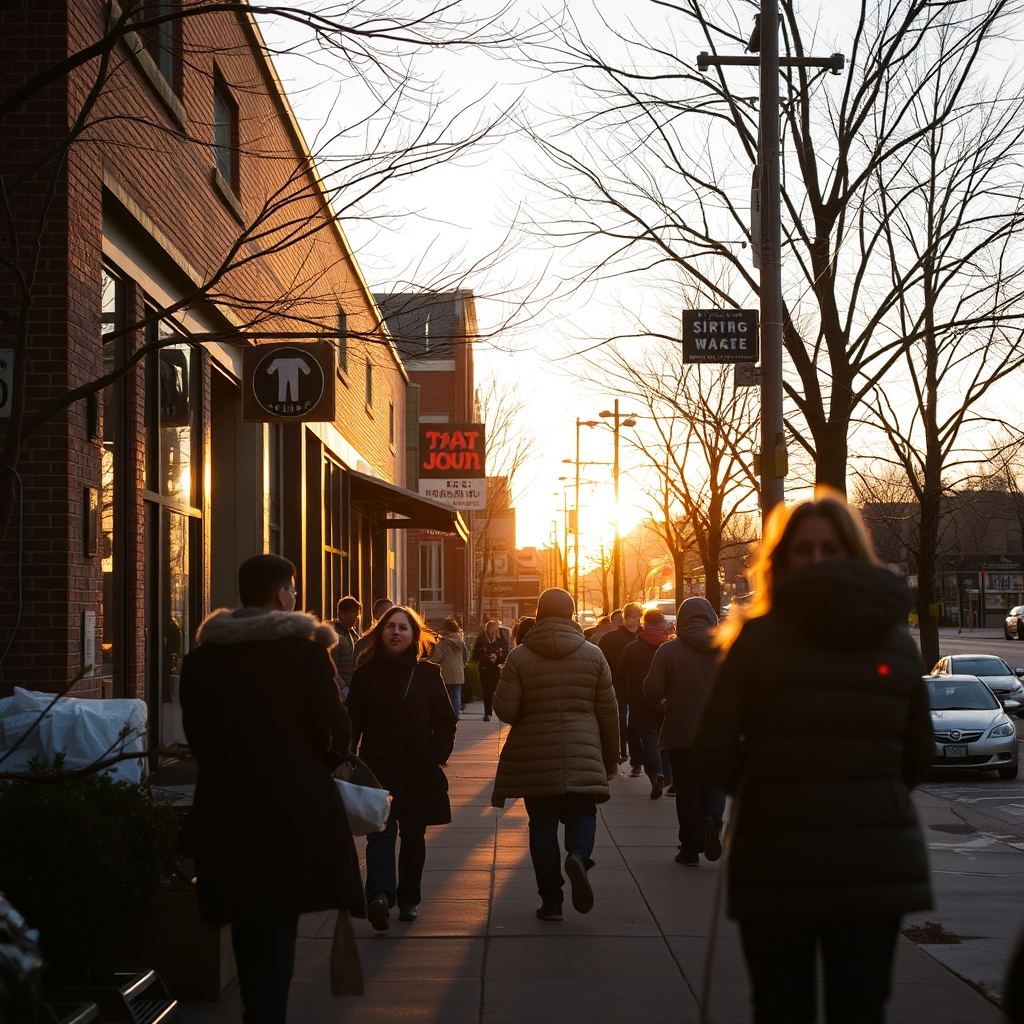
Ice storms, heating bills, road treatment and how much winter gear you actually need.
If you are arriving in Tulsa from a place that measures winter in feet of snow rather than rare inches, or from somewhere so mild that a frost advisory sends everyone indoors, you deserve an honest and unhurried introduction to what the cold months here actually feel like, because the reality is genuinely more nuanced, and more manageable, than most newcomers expect. Tulsa winters are brief, occasionally dramatic, and more often than not simply grey and breezy in that particular way of the southern Great Plains, where the sky opens wide and the wind has plenty of room to remind you it exists.
The Shape of a Tulsa Winter
December, January, and February carry the bulk of what you would call true winter weather, with temperatures that typically drift between the upper twenties and the low fifties depending on the week and the mood of the jet stream overhead. March teases warmth early and occasionally delivers it, while November tends to feel more like a prolonged autumn than any sort of serious cold. You will find that Tulsa does not commit to winter the way Chicago or Denver does. Instead, it offers a series of mild stretches interrupted by sharper cold snaps that remind you where you are on the map. The National Weather Service office in Tulsa maintains detailed seasonal forecasts and historical averages that are worth bookmarking when you want to understand the longer patterns of what to expect year to year.
Tulsa winters ask very little of you most of the time, and reward your patience with some of the most unexpectedly beautiful days you will find anywhere in the country.
The Ice Storm, Honestly Explained
Here is the piece of information that every person who has ever moved to Tulsa from the coasts or from the Deep South will eventually receive from a neighbor over a fence or a colleague at lunch: the thing to prepare for is not snow. It is ice. Once or twice a season, sometimes more and sometimes less, a particular confluence of warm air above and cold air at the surface produces freezing rain that glazes every road, sidewalk, tree branch, and power line in a quarter inch or more of clear ice. These events are genuinely striking to look at, the entire city transformed overnight into something that glitters, and genuinely inconvenient to be in if you are unprepared.
The city takes ice events seriously. The City of Tulsa maintains a fleet of trucks that pre-treat major roads with brine solution before a predicted event and deploys sand and de-icing material during and after. The practical reality is that arterial roads and highways tend to recover reasonably well within a day or two, while residential side streets in hillier neighborhoods can remain treacherous considerably longer. If you are considering where to buy or rent and you want to understand elevation and drainage in your prospective neighborhood, the Tulsa County Assessor's mapping tools can help you get a clearer picture of the terrain you would be navigating daily. Midtown and parts of south Tulsa have rolling topography that can make a quarter inch of ice feel quite different from the flatter grid of north Tulsa or the river corridor neighborhoods.
The honest advice from people who have lived here for years is simply this: when an ice event is forecast, stay home if you can. Stock your kitchen a day in advance, charge your devices, and plan to work remotely for a day or two. If you are someone who has already made the move to Tulsa as a remote worker, and our guide on the best neighborhoods for remote workers covers your options in wonderful detail, you are actually exceptionally well positioned for this particular quirk of the climate.
What Winter Gear You Actually Need
You do not need to purchase an arctic wardrobe. What you do need is a good winter coat, meaning something genuinely insulated rather than a layered fleece that works in mild climates, a few pairs of warm gloves, and at minimum one pair of waterproof boots with reasonable grip on slick surfaces. A hat that covers your ears will serve you far better than one worn for style alone on the days when a north wind is blowing across open ground. Beyond that, the investment is modest. Tulsa winters rarely demand the kind of heavy gear that residents of the upper Midwest consider essential, and you will likely find that a coat you already own performs perfectly well for the majority of the season.
For your vehicle, a good ice scraper with a foam brush handle is the single most useful purchase you can make before December arrives. If you are moving from somewhere warm, like the experience of relocating here from Atlanta that so many newcomers share, the concept of scraping ice from a windshield before your morning commute may be entirely new to you. It takes about three minutes when you have the right tool, and approximately fifteen frustrating ones when you do not.
Heating Bills and What to Expect
One of the genuine pleasures of settling in Tulsa is the cost of living, which runs roughly fourteen percent below the national average, and that cushion extends meaningfully into what you pay to heat a home. Natural gas is the predominant heating source here, and Oklahoma has historically offered some of the more affordable natural gas rates in the country. A well-insulated home of average size will carry a heating bill through the coldest months that is unlikely to produce the kind of shock newcomers from the Northeast sometimes brace for. Older homes, particularly in charming Midtown bungalow neighborhoods, may be less efficient, and it is worth asking about insulation and HVAC age before you sign anything. Homes in areas like Brookside, Jenks, and Bixby tend to be newer on average, and buyers in the upper two hundreds to around the low three hundreds in those markets are often getting construction that performs efficiently.
The Unexpected Gifts of a Tulsa Winter
What no one quite tells you until you have lived through your first season here is how beautiful the mild days between cold snaps actually are. A January afternoon in Tulsa at fifty-five degrees with full sun and the pecans bare against a blue sky is something that residents from colder places quietly treasure. The Gathering Place, that spectacular riverfront park along the Arkansas, remains open and genuinely lovely in winter, emptier than summer and somehow more serene for it. Families with teenagers, who may have their own complex feelings about the move itself, often discover that winter weekends offer a kind of unhurried permission to explore the city at a pace you simply cannot manage in July heat. Our guide for families moving here with teenagers touches on many of those possibilities in depth.
Tulsa in winter is not a hardship. It is simply a season, and a reasonably gentle one at that, asking from you a little preparation, a little patience on the rare icy morning, and a willingness to enjoy the surprising warmth that arrives between storms. You will find your footing here quickly, and the city, as ever, will be glad you came.
Keep exploring the full collection of Tulsa guides.