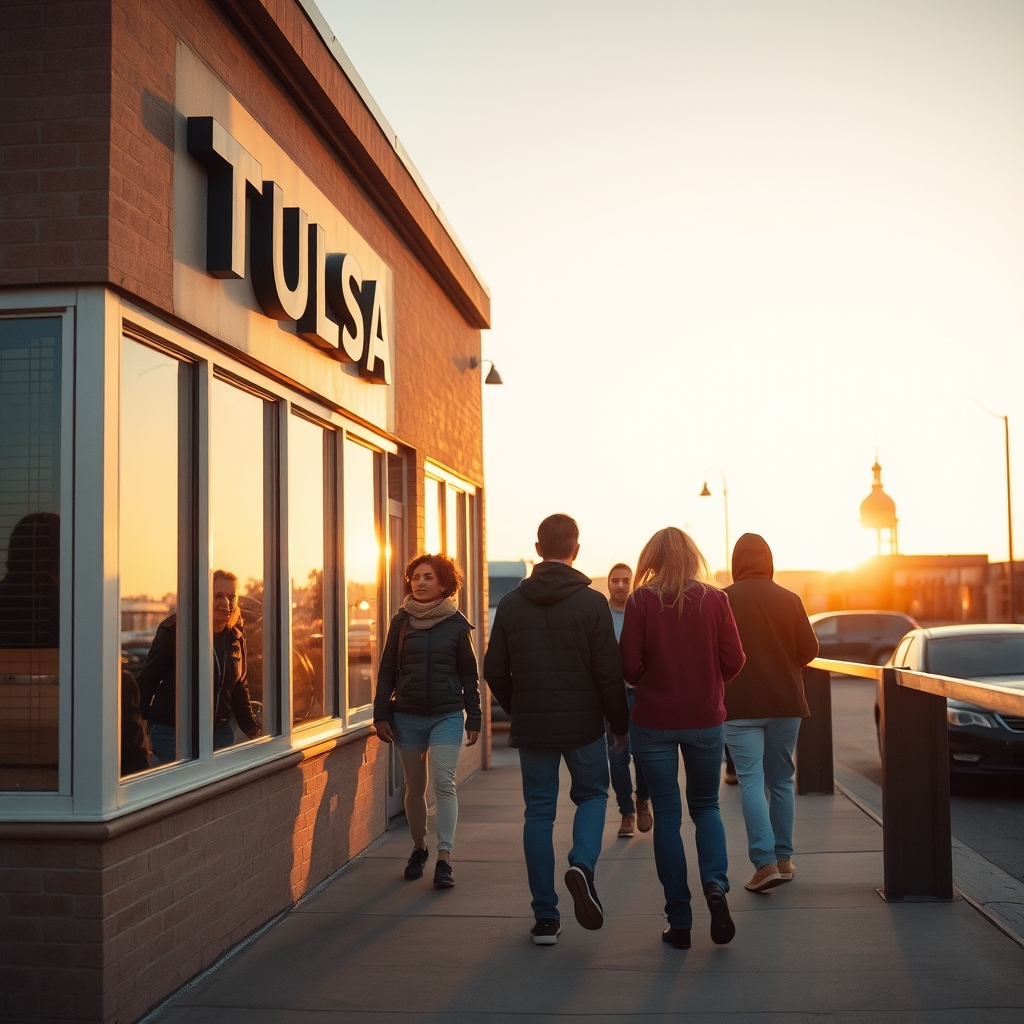
Honest comparison of Tulsa and OKC for people choosing between the two. Neighborhoods, jobs, culture, cost, and which city fits your lifestyle.
If you have found yourself sitting with two browser tabs open, one for Tulsa and one for Oklahoma City, toggling back and forth and wondering which city might truly feel like home, know that you are in very good company, and know, too, that the question deserves a thoughtful answer rather than a quick dismissal in either direction. Both cities have genuine warmth to offer, real opportunity to extend, and communities that will welcome you with open arms. What follows is an honest, unhurried look at what sets them apart, so that by the time you reach the end, you will feel far less like a stranger standing at a crossroads and far more like someone who already knows which front porch they want to sit on.
The Character of Each City, Honestly Considered
Oklahoma City is the state capital, and it carries that identity proudly. It spreads wide and flat across the prairie, with a downtown that has invested enormously in its Bricktown entertainment district and a civic energy that feels very much oriented around sports, particularly the NBA's Thunder, and around its oil and agriculture heritage. It is a city that rewards those who love a certain American openness, a sense of space both literal and figurative.
Tulsa, by contrast, is smaller and somehow more intimate for it. Situated along the Arkansas River in the northeastern corner of the state, it carries the legacy of its early oil-boom wealth in its architecture, its art collections, and its deep civic pride. The streets of Midtown are lined with mature trees arching over bungalows and Tudor revivals. The Brady Arts District hums with galleries and live music on a Friday evening. Brookside, running along Peoria Avenue, offers the particular pleasure of an independent-minded neighborhood where boutiques and chef-driven restaurants are tucked between homes where neighbors actually know one another's names. If you are someone who finds meaning in a city's layers, in the feeling that history and present-day creativity are in genuine conversation, Tulsa is very likely the one that will move you.
Tulsa has a way of feeling, almost immediately, like a place that was waiting for you to arrive.
Neighborhoods and the Question of Where You Will Actually Live
One of the most reassuring things you will discover about Tulsa is how distinct and walkable its neighborhoods feel relative to the city's size. Downtown has seen real investment, with the Gathering Place, a world-class park along the river that cost $465 million to build and remains free and open to the public, serving as an anchor for community life in a way that is genuinely rare. Young professionals and creative types have been drawn to the Pearl District and the East Village, while families tend to gravitate toward the quieter rhythms of Midtown or head a bit further south into Brookside.
If you are drawn to excellent schools and newer construction without sacrificing a sense of community, the suburbs surrounding Tulsa deserve your attention. Jenks and Bixby to the south have become destinations in their own right, with highly regarded school systems, newer housing stock, and that particular combination of suburban calm and easy access to the city. Owasso to the north offers similar appeal with a strong community character of its own. For a full look at how these neighborhoods compare in feel and lifestyle, the Moving to Tulsa from Los Angeles guide walks through the texture of daily life here in ways that often surprise people arriving from larger coastal metros.
Oklahoma City's neighborhoods, meanwhile, tend to require a bit more intentionality to discover. Mesta Park and Heritage Hills offer genuine architectural beauty, and the Plaza District has cultivated a creative scene worth celebrating. But the distances between the best pockets of the city can feel sprawling, and the overall walkability score lags behind what Tulsa has quietly achieved.
Cost of Living and the Tulsa Remote Opportunity
Both cities offer a cost of living that will likely stop you in your tracks if you are arriving from a coastal market. Across Oklahoma generally, costs run around 14 percent below the national average, and housing in particular will feel almost startling in its accessibility. In Tulsa, you can find genuinely lovely homes in sought-after neighborhoods in the upper $200s, and comfortable family homes in areas like Bixby or Jenks for around $300,000, often with square footage and lot sizes that would be unimaginable at similar price points in cities like Chicago or Los Angeles.
Tulsa also holds a particular card that Oklahoma City does not. The Tulsa Remote program, one of the most talked-about relocation incentives in the country, offers remote workers a $10,000 grant simply for choosing to make Tulsa home. If your work travels with you, this is a meaningful welcome gift from a city that is genuinely invested in growing its community. The Moving to Tulsa from Chicago guide speaks to this at length, including how that grant can ease the practical side of a cross-country move in ways that go well beyond the symbolic.
Jobs, Industries, and Building a Career
Oklahoma City has a larger overall economy, driven significantly by energy, aerospace, and government, and if your field is tied to any of those sectors, it warrants serious consideration. Tulsa, though, has worked deliberately to diversify beyond its oil roots, with growing strength in aerospace and aviation, finance, healthcare, and an increasingly recognized technology and startup scene. Companies like NORDAM, American Airlines' maintenance hub, and a range of mid-sized employers have made Tulsa a genuinely workable choice for a wide range of professionals.
The food and cultural life of Tulsa, which has always punched above its weight, continues to draw people who want more from a city than a place to simply work and sleep. If that dimension matters to you, the Tulsa Food Scene guide will introduce you to a dining culture that tends to surprise and delight in equal measure.
The Honest Answer to the Question
If you are drawn to size, to a capital city's particular energy, to the NBA, or to industries concentrated in the OKC corridor, Oklahoma City is a fine choice and one you would not regret. But if what calls to you is a city with a strong sense of its own identity, walkable and storied neighborhoods, a cultural life that rewards curiosity, a generous cost of living, and a community that has made an art form of welcoming people who chose to arrive on purpose, then Tulsa is very likely already making its case somewhere in the back of your mind. The wisest thing you might do is simply listen to it.
Keep exploring the full collection of Tulsa guides.