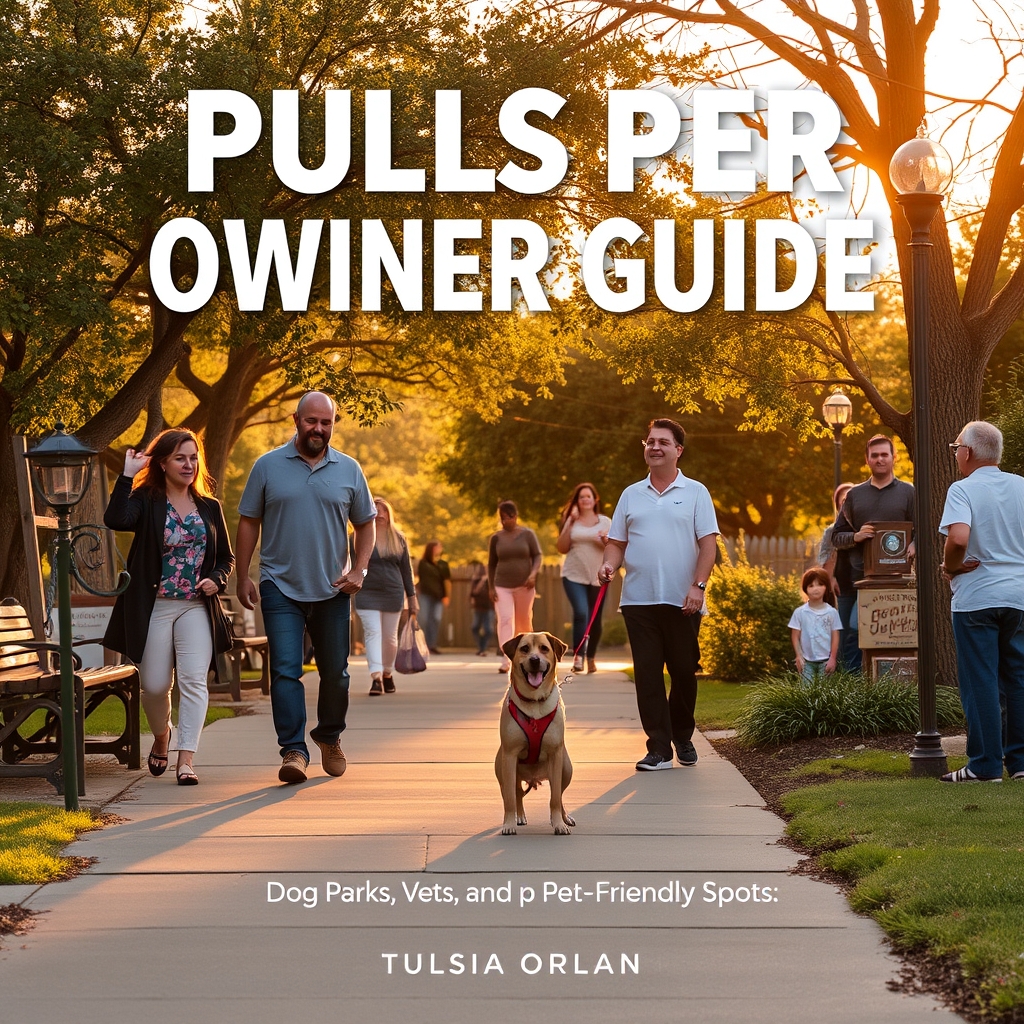
Moving to Tulsa with pets. Best dog parks, veterinarians, pet-friendly apartments, and what pet owners need to know about Oklahoma.
If you are arriving in Tulsa with a dog at your feet or a cat carrier on the seat beside you, let us be the first to say that your four-legged companion has landed in a genuinely wonderful city. Tulsa has grown into a place where pets are not simply tolerated but warmly woven into daily life, and whether your mornings revolve around a long trail walk, a coffee shop patio, or simply finding a trusted veterinarian who will remember your dog's name, you will discover that this city makes room for all of it with a generosity that may pleasantly surprise you.
A City That Genuinely Welcomes Animals
One of the first things you will notice as you settle in is how frequently you see dogs accompanying their owners through Tulsa's daily rhythms. Midtown, with its canopy of old trees and walkable streets, is particularly popular among dog owners who appreciate a quiet morning stroll through neighborhoods where historic homes sit behind spacious yards. Brookside, that charming stretch along Peoria Avenue lined with independent restaurants and boutiques, welcomes leashed dogs on its sidewalks and patios with a casualness that feels entirely natural. Even the energy of downtown, where new apartments and renovated warehouses attract younger residents, has embraced a culture where pets are part of the picture rather than an afterthought.
If you are relocating and weighing the financial side of this move, it is worth knowing that Tulsa's cost of living runs roughly 14 percent below the national average, and that savings extends meaningfully to pet ownership. Veterinary visits, grooming appointments, and even pet-friendly housing tend to carry price tags that feel refreshingly reasonable compared to most major metros. If you were drawn here by something like the Tulsa Remote program's $10,000 grant, you will find that your dollars stretch even further when you factor in the cost of caring for an animal companion in this city.
Your pet will find their place here just as surely as you will, and Tulsa has a way of making that belonging feel easy and unhurried.
Dog Parks Worth Knowing by Name
Tulsa takes its off-leash spaces seriously, and you will want to acquaint yourself with a few of them before your first weekend arrives. Chandler Park Dog Park, situated on the west side of the city, is one of the most beloved, offering a generous amount of space divided into sections for large and small dogs, with shade trees and a genuinely friendly community of regular visitors who will make you feel like a local within a few visits. Renaissance Park in Midtown provides a smaller, more intimate setting that suits dogs who prefer a quieter social scene, and it sits conveniently close to several walkable neighborhoods.
For something truly remarkable, the Gathering Place along the Arkansas River deserves its own mention. This extraordinary 100-acre park, widely considered one of the finest public parks in the country, welcomes leashed dogs throughout much of its grounds. Walking the river trail at golden hour with your dog beside you, the skyline catching the last of the light, is one of those experiences that will make you feel at home in Tulsa in a way that nothing else quite manages. The park also connects to the River Parks trail system, a network of paved and unpaved paths stretching for miles along both banks of the Arkansas, giving you and your dog an almost limitless supply of morning routes.
Finding Veterinary Care You Can Trust
Tulsa has a well-established community of veterinary practices, from small neighborhood clinics where the staff will know your pet by their second visit, to full-service animal hospitals equipped for specialist care and emergencies. The Midtown and South Tulsa corridors have a particularly strong concentration of well-regarded practices, and many of them are accepting new patients readily as the city continues to grow. Emergency veterinary care is available around the clock through several facilities, which is the kind of reassurance that every pet owner deserves to have in their back pocket from day one.
It is also worth knowing that Oklahoma does not require veterinary referrals for specialist visits, which means if your dog ever needs a cardiologist, an oncologist, or a veterinary dermatologist, you can seek that care with relative ease. The Tulsa area supports a growing network of specialty animal hospitals, and the cost of specialist care here tends to fall noticeably below what you may have paid in a larger coastal city.
Pet-Friendly Housing Across Tulsa's Neighborhoods
If you are still deciding where to plant roots, you will be glad to know that the pet-friendly apartment market in Tulsa is genuinely accommodating. Many of the newer apartment communities in downtown and the East Village have embraced amenities like dog washing stations, on-site pet parks, and generous weight limit policies that larger cities rarely extend. Monthly rent in these well-appointed buildings tends to land in a range that feels almost implausibly reasonable if you are arriving from a coastal market.
For those who are ready to purchase, the suburbs offer their own appeal. Bixby and Jenks, to the south, draw families with spacious yards and quiet cul-de-sacs that give dogs room to breathe, with homes often found in the upper $200s to around $300,000 for a comfortable amount of space. Owasso, to the north, offers similarly generous lot sizes and a small-town feeling that suits both owners and animals who prefer a slower pace. If you are curious about how family considerations play into the neighborhood choice, the guide to raising children in Tulsa draws a thoughtful picture of what life in these communities looks like on a day-to-day basis.
A Few Things Oklahoma Pet Owners Should Know
Oklahoma summers are warm, and some years they are genuinely hot, so building a routine around early morning or evening walks during July and August will serve both you and your dog well. Pavement retains heat quickly, and the kind of midday walks that feel fine in April can become uncomfortable for paw pads by midsummer. Most longtime Tulsa dog owners simply shift their rhythms with the seasons, which proves easier than it sounds once you find your groove.
Oklahoma also has a population of wildlife worth being aware of, including coyotes who occasionally appear even in suburban neighborhoods at dusk, and copperhead snakes who favor wooded areas and tall grass. A simple rattlesnake aversion course, offered periodically by local trainers, is something many Tulsa dog owners consider a worthwhile investment, particularly if your pet tends toward bold curiosity on the trail. Beyond these manageable considerations, though, you will find that life with a pet in Tulsa feels remarkably uncomplicated, and the city has a way of making room for the kind of quiet, easy days that both you and your companion deserve. If you are coming from a place where everything felt a little louder and a little more expensive, you may find, as so many others have, that the move to Tulsa carries a deep sense of relief that extends to every member of the household, the ones on four legs very much included.
Keep exploring the full collection of Tulsa guides.